
Post by Ejike Udeogu
In the article published by the Economist (12 April, 2014), Nigeria was remarked to have overtaken South Africa as the biggest economy in Africa; as a result of her GDP revision. The value of Nigeria’s gross domestic output surpassed South Africa’s by over $150 billion. Unarguably, as the report also pointed out, the revised GDP paints a truer picture of Nigeria’s economy, albeit only on the final gross national output. The gross national output or product (GDP), as defined by the OECD, is the aggregate measure of the sum of the gross values added by all resident institutional units engaged in production in a given year. Nowadays, this measure is often used by economists to measure the so called ‘economic growth’. The GDP estimates are now commonly used to measure the economic performance of a whole country. In economics jargon therefore, Nigeria’s economy is ‘growing’.
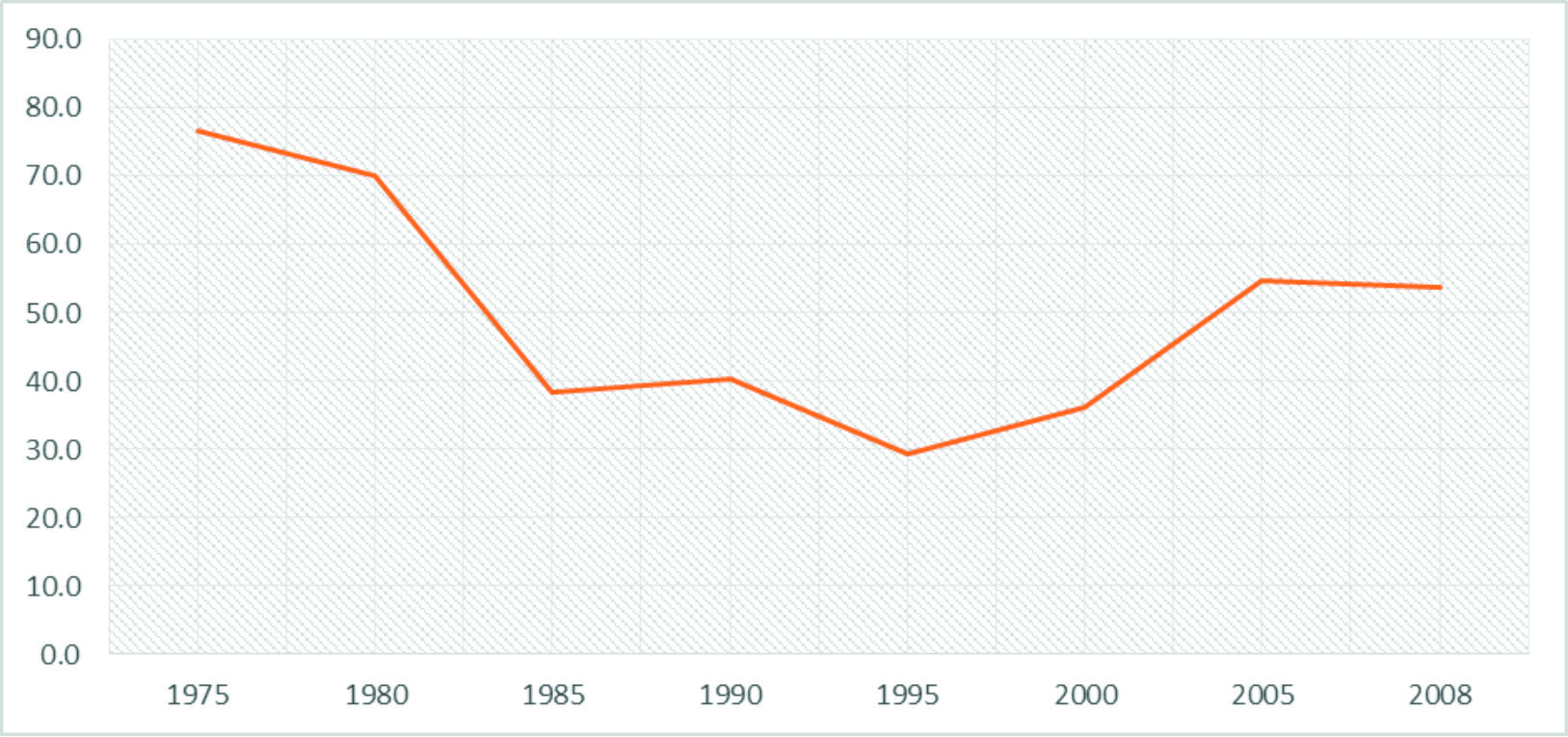
Nevertheless, in the midst of these heightened economic growths, the truth is that a large proportion of the population are still living in abject poverty. Over 60% of Nigerians live below $1.25 a day (according to World Bank’s 2013 estimate). In reality though, over 80% of Nigerians are living below $2 a day. Though national unemployment is shown to be in the mid-twenties, the real fact is that youth’s (15s-25s) unemployment rate is in the mid-fifties (that is five out of every ten youths are probably unemployed). Furthermore, the country’s manufacturing capacity utilisation is ominously appalling. The manufacturing capacity utilisation has been consistently below the averages obtained in other emerging economies (Fig. 1). As a result, productivity is very low in the country.
Figure 1. Manufacturing capacity utilisation
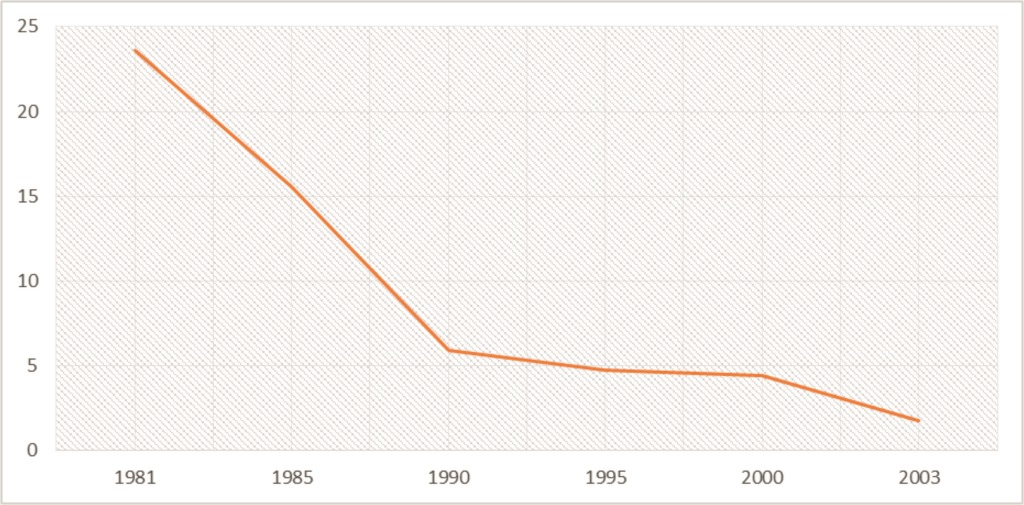
Also, the country is one of the most unequal societies in the world, with a Gini coefficient of 48.8%. Share of the national income derived from taxes on income of the highest ten per cent earners (a very small proportion of the population) have increased over the years (it is currently around 40% of the national income). While those from the majority (over 50%) of the population who are in the lowest 20% income bracket, constitute less than five per cent of national income (this has been declining over the years; see Fig. 2 below). This shows that the income of the top ten per cent have been increasing whilst that of the lowest 20% have stagnated or decreased over the same periods.
Figure 2. National income contribution

More worrying is the rate of compensation to wage labourers. The rate of growth of compensations to wage labourers have fallen short of the rate of increases in prices. To emphasise, 100 Nigerian naira will buy less items these days than it could procure ten or even five years ago. The income compensation, measured against the increasing national output, paints a rather worrying picture (Fig. 3 below).
Figure 3. Employee compensation (% of GDP)
Therefore, in all these hullabaloo, what are we actually trying to measure? While the illusory indicator of growth, the GDP estimate is increasing, the real indicators of development – high employment rate, lower poverty levels, and decreasing income equality, still remain a mirage. The country may be a giant, but it is still poor. Nigeria ranks 153rd out of 187 countries in the UN’s Human Development Index. The country’s economic and social development still remain far below the average for poor countries. For instance, life expectancy at birth in Nigeria is only 52.3 years while the average for low income countries is 59.1 years. Under-five mortality rate is at 143 per 1,000 live births in Nigeria while for low income countries, the average is 110 per 1000.
Therefore, it is pertinent that policy makers in Nigeria are not deceived by the growing economy, for it is rather an illusion. Let Nigeria celebrate its new-found ephemeral status for a moment but then she needs to wake up and get hands-on with the task of addressing the real issues blighting her over 160 million people if she truly wants to live up as Africa’s numero uno.
 FusionIQ Consulting Limited